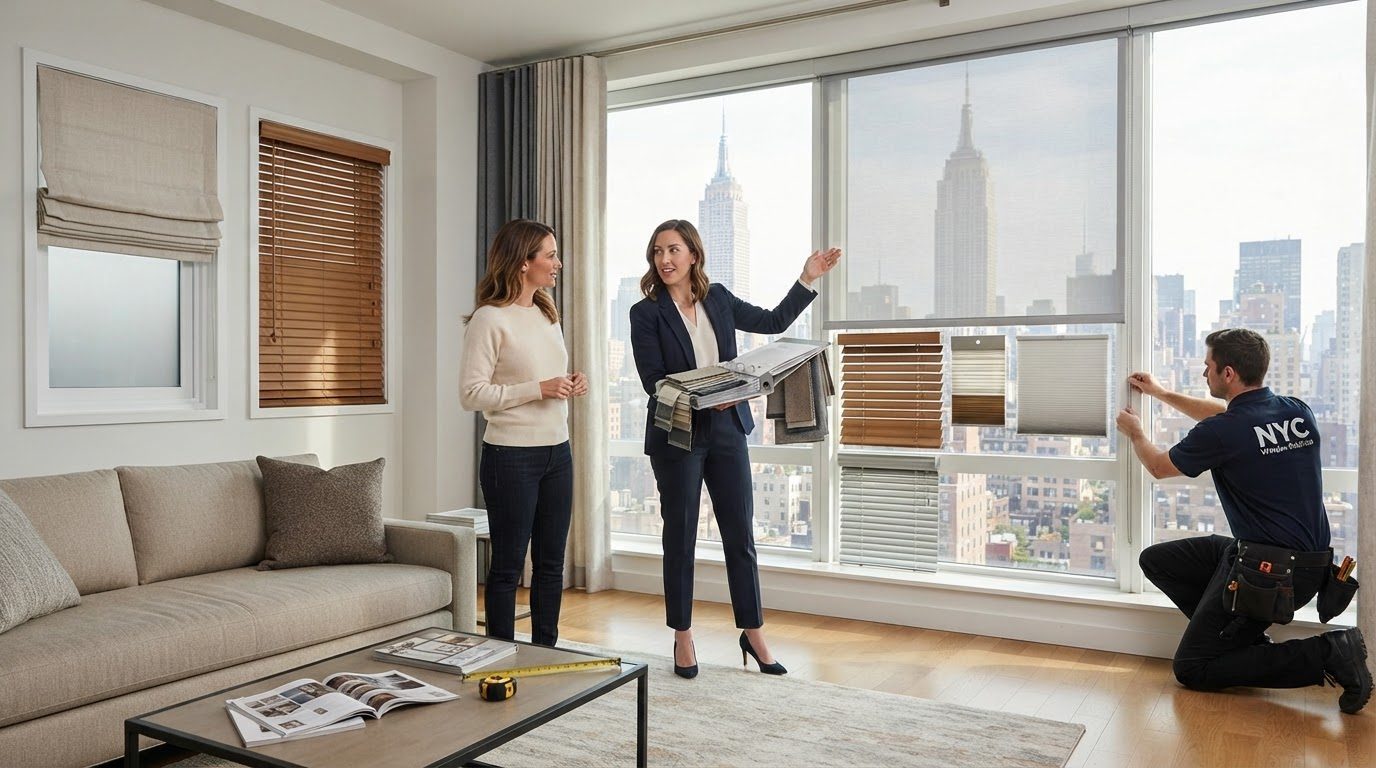
In New York, window treatments must do more than finish a room. They need to manage bright western exposure, close neighboring buildings, irregular prewar frames, limited wall space, and, in many apartments, installation logistics that are as demanding as the design itself.
Choosing a Blinds company New York means evaluating more than fabric samples or online prices. The right provider should understand the building type, measure accurately, recommend suitable operating systems, and coordinate fabrication and installation without compromising the window’s architecture.
A practical starting point is to review the service model offered by The Blinds Source alongside other local providers. Look for evidence of a complete process—consultation, field measurement, product specification, installation, and aftercare—rather than treating window coverings as a simple retail purchase.
What a New York Blinds Company Should Help You Solve
New York homes range from compact studios and glass-walled condos to brownstones with deep casings, bay windows, and preserved trim. A narrow opening may require an inside-mount shade with minimal projection, while a floor-to-ceiling window may need multiple linked shades, reinforced brackets, and motorization.
A professional assessment should connect the treatment to the room’s actual demands:
- Privacy: Essential where apartments face one another or sit near busy streets.
- Glare control: Solar shades can reduce screen reflections while preserving an outward view.
- UV protection: Appropriate fabrics and openness levels can help limit fading of floors, artwork, and furniture.
- Temperature management: Cellular shades and lined drapery add an insulating layer against winter drafts and summer solar gain.
- Room darkening: Blackout fabrics, side channels, and overlapping drapery are more effective than a standard light-filtering roller shade alone.
Custom measurement is particularly important when windows are uneven, oversized, unusually shaped, or difficult to reach. A survey should document recess depth, frame condition, sill clearance, headroom, mounting surfaces, and the relationship between the window and nearby furniture. Measuring only the visible glass can produce gaps, interference, or a shade that cannot fully operate.
It is also useful to distinguish three business models. A product retailer primarily sells units; a design consultant focuses on aesthetics and selection; a full-service blinds company manages design, measurement, ordering, installation, and service. For a multi-room or technically complex project, the last option generally reduces coordination risk.
Blinds and Shades for Different New York Spaces
City Apartments and Condos
Apartments often require clean lines, limited projection, and strong privacy control. Roller shades are compact and versatile, while solar shades reduce glare in sunny living rooms. Their openness factor—commonly measured from about 1% to 10%—determines how much light and visibility pass through.
Cellular shades are useful where insulation matters, particularly at older windows. Cordless operation reduces visual clutter and is a sensible safety choice in children’s rooms. In high-rise buildings, confirm whether the building requires contractor insurance, freight-elevator reservations, approved work hours, or advance certificates of insurance.
Brownstones, Townhouses, and Prewar Homes
Older properties may have deep wood casings, plaster irregularities, decorative trim, transoms, and radiators positioned below windows. Inside mounts can preserve architectural details, but an outside mount may be necessary when recess depth is inadequate.
Wood blinds bring structure and adjustable daylight control. Roman shades and woven shades provide fabric texture without overwhelming original millwork. Layered treatments—such as a Roman shade with side panels—can combine privacy, softness, and stronger evening coverage while maintaining the room’s proportions.
Large Glass, Skylights, and Specialty Windows
Floor-to-ceiling and corner windows create scale and access challenges. A single oversized shade may be too heavy or difficult to service, so a designer may divide the opening into coordinated panels. Motorized roller or solar shades are especially practical where windows are tall, furniture blocks manual controls, or daily adjustment is frequent.
Skylights require products designed for sloped or overhead installation, including tensioned systems that prevent fabric from sagging. Specialty shapes, arches, and angled windows should be evaluated individually rather than forced into standard rectangular products.
Commercial and Design Projects
Offices, hospitality spaces, retail interiors, and multifamily developments need consistent specifications across many openings. Important considerations include fabric availability, cleanability, fire-performance requirements where applicable, control standardization, delivery sequencing, and installation access.
A commercial provider should issue clear schedules, elevations or window schedules when appropriate, and a defined process for field changes. Durability and replacement availability can matter more than a small initial price difference.
Choosing Among Blinds, Shades, Drapery, and Motorization
Each category involves trade-offs:
- Wood blinds: Warm appearance, adjustable light, and moderate privacy; less suitable for high humidity or very wide openings without careful specification.
- Metal blinds: Durable, relatively economical, and precise, though visually more utilitarian.
- Roller shades: Minimal profile, broad fabric selection, and straightforward operation; blackout performance depends on fabric and edge treatment.
- Solar shades: Excellent glare and UV control while retaining views; they do not provide complete nighttime privacy when interior lights are on.
- Cellular shades: Strong insulation relative to their depth and useful for bedrooms; pleated construction can require more careful cleaning.
- Roman shades: Fabric softness and design flexibility, but their stack height and folds must be planned around the glass and trim.
- Drapery: Adds acoustic softness, insulation, and substantial blackout potential with lining; it requires more wall space and may obstruct views when open.
- Layered treatments: Combine functions, such as a solar shade for daytime glare and lined drapery for nighttime privacy, but increase cost and installation complexity.
Typical installed pricing varies widely. Basic roller or aluminum blinds may begin around $150 to $400 per opening, while custom Roman shades, premium wood blinds, or motorized systems can range from $600 to more than $2,000 per opening. Large, specialty, or heavily accessorized installations can exceed those figures. A credible estimate should separate product, fabrication, delivery, installation, and service charges.
Motorization may use a handheld remote, wall switch, app, timer, voice assistant, or smart-home platform. It is most valuable for height, scale, accessibility, and coordinated schedules—not merely convenience. Confirm motor battery life or outlet requirements, charging access, wireless protocol compatibility, and whether replacement motors will remain available.
What a Professional Installation Experience Should Include
Consultation and Design Guidance
An in-home consultation should examine room use, sun exposure, décor, privacy expectations, cleaning preferences, and the desired operating method. Samples are more reliable than photographs because fabric color changes with daylight and nearby finishes.
Ask the consultant to compare openness, opacity, lining, stackback, valance options, and mounting positions. Furniture placement and HVAC registers can affect how a treatment operates.
Measurement and Product Specification
The installer should record width and height at multiple points, especially in older buildings where openings may not be square. The specification should address:
- Inside versus outside mount.
- Recess depth and bracket clearance.
- Handle, crank, and sill interference.
- Shade stackback and drapery return.
- Control position and child-safety requirements.
- Outlet access, battery placement, and motor clearance.
A final recommendation should be based on these field conditions, not solely on a catalog size.
Ordering, Fabrication, and Scheduling
Custom products often require several weeks for fabrication, with timing affected by fabric availability, motor configuration, holidays, and revisions. For multiple rooms, request a written sequence showing approval, production, delivery, installation, and punch-list stages.
The company should explain how it handles discontinued fabrics, measurement discrepancies, damaged goods, or unusual mounting conditions. A deposit and cancellation policy should be clear before ordering.
Installation and Aftercare
Professional installation includes secure anchoring into suitable substrates, level brackets, aligned shades, clean trim, and protection for floors and furnishings. Technicians should demonstrate operation, charging, programming, and manual override procedures.
Before final payment, inspect alignment, light gaps, fabric handling, motor response, and finish quality. Confirm separate warranty terms for product, motor, workmanship, and post-installation adjustments. Ask whether the company can supply replacement parts or support future automation upgrades.
New York’s seasonal temperature swings and intense summer sun make periodic inspection worthwhile. Dusting with a soft brush and following the fabric manufacturer’s cleaning instructions can extend service life; aggressive household cleaners may damage coatings and finishes.
Questions to Ask Before Hiring a New York Blinds Company
- Is the consultation complimentary, and who will manage the project after the design meeting?
- Does the company use its own trained measurement and installation team?
- Which brands, materials, cordless systems, motors, and smart-home platforms are available?
- Can it address blackout, UV exposure, skylights, oversized windows, or sound-sensitive rooms?
- Does the estimate separate product, fabrication, delivery, installation, tax, and service?
- What warranties cover the product, motor, workmanship, and adjustment visits?
- Can the company provide relevant local project examples and verifiable reviews?
- Does it serve the specific borough, neighborhood, Long Island community, or surrounding area?
The strongest choice is rarely determined by the lowest quote. It is the provider that can translate New York’s unusual windows and demanding access conditions into a measured, documented, serviceable solution. A thoughtful specification at the beginning usually costs less than correcting an ill-fitting treatment after installation.
