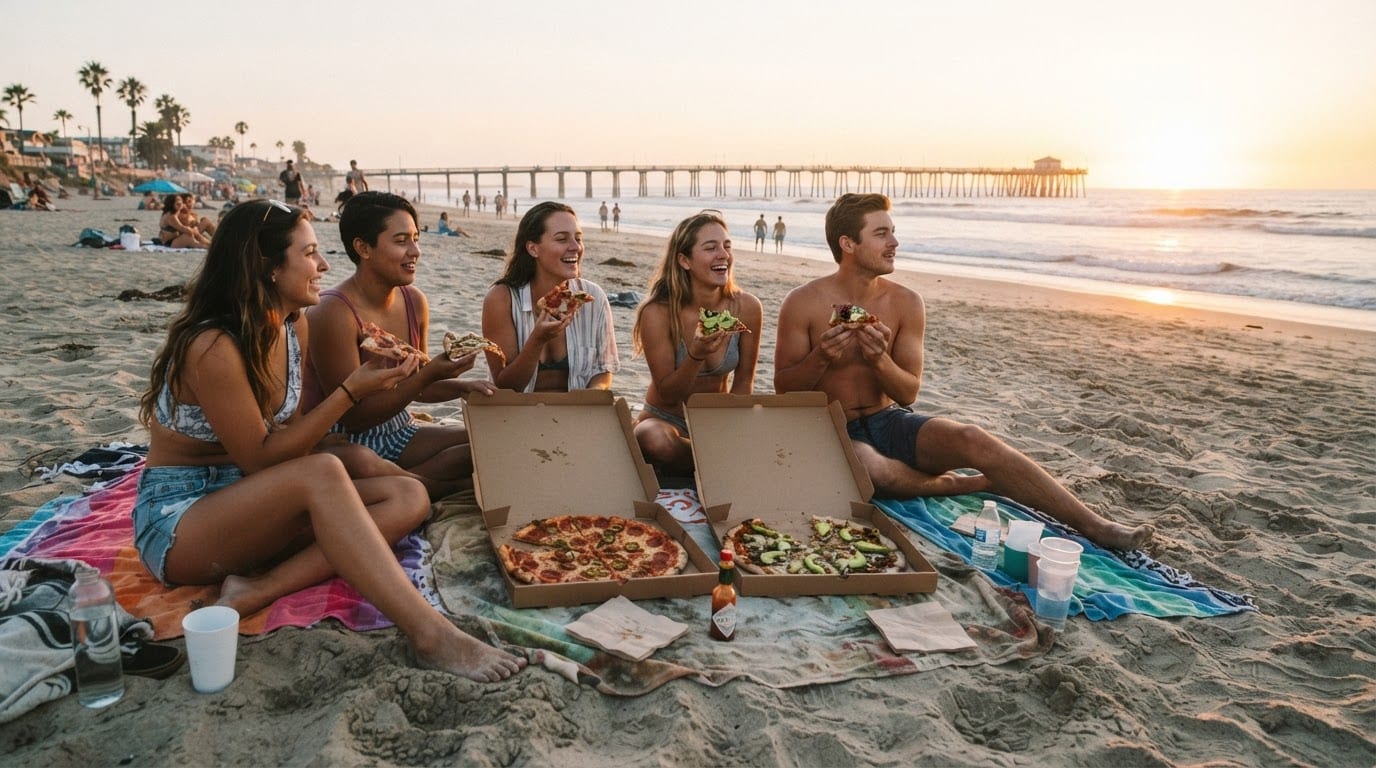
Few neighborhoods in San Diego change their eating habits as quickly as Pacific Beach. On a July afternoon, the sidewalks along Garnet Avenue fill with people in wet swimwear, and by 11 p.m. the same blocks are full of students and bar-goers looking for something hot and portable. Pizza sits at the center of both scenes, but the right order depends on the hour, the crowd, and how far the box has to travel.
pacific beach pizza San Diego is a useful starting point for anyone trying to sort out which spots fit a given afternoon or evening. The neighborhood supports a wide mix of formats, from counter-service slice shops near the boardwalk to full-service dining rooms a few blocks inland, and the differences matter more here than in quieter parts of the city. A pie that works well eaten on a towel at Crystal Pier may fall apart in a rideshare on the way back to a rental.
Before ordering anywhere, it helps to know what a pizzeria can and cannot control. Oven temperature, dough hydration, and sauce quality are fixed by the kitchen, but timing, packaging, and the route from oven to table are shaped by the customer. Seaside Pizza Co is one of the many local operators working within those constraints, and the same principles apply to any shop in the area: order with the eating situation in mind, and judge the pizza on what arrives at your table rather than on how it looked in a photo.
Why Pacific Beach Pizza Follows Its Own Rules
Pacific Beach has an unusually layered population. Daytime visitors arrive for the sand and boardwalk, weekly renters stay for a few nights, university students live in dense rental blocks, and a late-night crowd fills the bars along the main commercial strips. Each group orders differently. Visitors tend to want a single cheap slice or a shareable pie they can eat in shorts. Students often order large pies for late-night delivery. Renters, who may have a kitchen but little cookware, look for leftovers that reheat well.
The neighborhood’s layout reinforces these patterns. Much of Pacific Beach is walkable, with short blocks and a boardwalk that runs along the coast toward Mission Beach. That density means delivery radii are often short, and many customers simply walk to a shop rather than wait for a driver. Compared with suburban San Diego, where a 20-minute drive is normal, a Pacific Beach kitchen competes on speed and proximity. A shop two blocks away can outperform a higher-rated pizzeria across town simply by getting a hot pie to the table faster.
Dining style also shifts. Outdoor seating, takeout boxes, and grab-and-go slices carry more weight here than in areas where sit-down dinners dominate. Operators who serve the neighborhood well tend to design their menus around portability: pies that hold their structure, slices sized for one hand, and packaging that vents steam without turning the crust soggy.
Matching the Pie to the Occasion
Pizza styles are often ranked against each other in the abstract, but the more useful question is which style fits which moment. Four styles dominate menus in the area: New York-style, Neapolitan, pan or Sicilian, and Detroit-style. Each has distinct structural properties.
- New York-style: A thin, pliable crust, typically 14 to 18 inches, with enough gluten development to support a fold. Best for a quick beach lunch or a walking meal.
- Neapolitan: A thin center with a puffed, leopard-spotted cornicione baked at high heat, often in a wood-fired oven at around 900°F. Excellent eaten immediately at a table, but the center softens quickly once it cools.
- Pan or Sicilian: A thick, airy crust proofed in an oiled pan, with a fried, golden base. Strong for group dinners and reheats well.
- Detroit-style: A rectangular, high-hydration dough baked in steel pans, with cheese reaching the edges and caramelizing into a crisp frame. Ideal for sharing, though the cheese-crust edge can harden as it cools.
Thin, Foldable, and Built for Walking
A slice that will be eaten outdoors has to resist three forces: gravity, moisture migration, and wind. Crust structure matters most. A New York-style base with a sturdy rim and a moderately dry center folds without tearing, while an overly hydrated dough sags and releases oil at the tip.
Sauce moisture is the second factor. Thin, cooked tomato sauces applied in measured amounts keep the center from becoming a wet pool. Heavily watered sauces or large quantities of fresh mozzarella release liquid as the pie sits, which is why many shops choose low-moisture mozzarella or a blend for pieces meant to travel.
Cheese distribution determines whether the slice holds together. Even coverage with a thin layer of cheese that reaches the rim creates a stable surface, while clumped toppings can slide off during the first bite. When checking a slice, look for a crust that springs back slightly when pressed, a bottom with light golden spotting rather than pale, dense flatness, and cheese that is set rather than runny.
Thick, Crisp, and Built for Sharing
Pan and Detroit-style pies suit groups because they are dense enough to hold weight and feed several people from a single pie. They also reheat more predictably than thin crust. The key checks are at the edges. A well-made pan pie should have a fried, crisp bottom and sides with a clear color change, not a pale, gummy ring. Detroit-style edges should show dark caramelized cheese, while Sicilian edges should be crisp but not scorched.
For reheating, oven or air-fryer warming at 350 to 375°F for several minutes restores crispness far better than a microwave, which turns the crust soft and rubbery. Pies that cost roughly $25 to $40 for a large pan style are common in the area, and sharing the pie among four people generally works out to a comparable per-person cost to two large thin-crust pies.
Planning Around Beach Days, Crowds, and Timing
Weekend demand in Pacific Beach is intense from late spring through early fall. Summer traffic on Mission Boulevard and Garnet Avenue can add significant time to a delivery, and street parking is limited, with metered spaces filling quickly and residential permit zones enforced. Many visitors who drive to a shop end up circling for 15 minutes or more. Walking or using a rideshare is often faster.
Each service option carries tradeoffs:
- Dine-in: Delivers the best texture for Neapolitan and thin-crust styles, since the pie reaches the table within minutes of leaving the oven. Expect longer waits on weekend evenings.
- Pickup: Usually the best balance of speed and quality. A pie that is eaten within 10 to 15 minutes of pickup typically keeps reasonable texture, especially if the box is vented.
- Delivery: Adds transit time, and steam trapped in insulated bags softens crust. Thin styles suffer most. Thick pan or Detroit-style pies handle delivery better because their structure resists sogginess.
Practical timing tips help. Ordering ahead for pickup avoids the rush, and calling in before the late-afternoon crowd arrives around 5 p.m. can shorten the wait. Sunset draws large crowds to the Crystal Pier area and the boardwalk, so restaurants near the water often fill from about 6:30 to 8 p.m. on clear evenings. Arriving earlier or later, or ordering to take away, avoids most of that pressure.
Leftovers deserve planning too. Cool pizza quickly on a wire rack rather than stacking slices in a closed box, refrigerate within two hours, and reheat in an oven or skillet. Rental kitchens often lack pizza stones, so a sheet pan works well.
Toppings, Dietary Needs, and Local Flavor Twists
Specialty toppings in the neighborhood tend to reflect Southern California’s produce culture more than seafood-heavy traditions. Common options include roasted peppers, artichoke hearts, fresh basil, arugula added after baking, and avocado or pico de gallo on fusion-style pies. Some shops add seafood, such as shrimp or smoked fish, but these are less consistent across menus and should be checked case by case. Fusion pies can be enjoyable, though a strong topping should be balanced against sauce acidity so the pie does not taste flat.
Dietary accommodation varies widely. Gluten-free crusts are common, but most are prepared in shared ovens and on shared surfaces. The FDA defines gluten-free labeling as fewer than 20 parts per million of gluten, yet that standard applies to packaged foods and says little about cross-contact in a busy kitchen. People with celiac disease should ask whether gluten-free dough is prepared on separate surfaces and whether pies are baked in shared pans or screens.
Vegan cheese is another area where questions matter. Plant-based mozzarellas differ in melt, browning, and stretch, and some are made with coconut oil or starch blends. Ask whether the cheese is applied before or after baking, and whether the sauce contains dairy or anchovy, which some pizzerias use in their base.
Allergen handling should be addressed directly with staff. The FDA recognizes nine major food allergens, including milk, eggs, fish, shellfish, tree nuts, peanuts, wheat, soybeans, and sesame. Useful questions include whether toppings are prepped in shared containers, whether sauces contain nuts or seafood, and whether the kitchen uses a dedicated area for allergen orders. San Diego County’s Department of Environmental Health and Quality publishes food facility inspection results, which provides a useful check on sanitation practices.
To spot house-made ingredients, look for menu language that names specific preparations, such as house-cured sausage, marinated vegetables, or dough described with a fermentation time. Standard commercial options are usually described generically, such as "pepperoni" or "mozzarella blend," without producer details. Neither is inherently better, but house-made items often signal more control over the final product.
Setting Expectations for Visitors and First-Timers
Visitors often ask whether Pacific Beach is a good place to stay in San Diego. For a longer trip, the neighborhood works well for those who want beach access, walkable dining, and nightlife, but it is busier and less quiet than areas like La Jolla or Point Loma. Renters who plan to cook should check whether their unit has an oven and enough cookware, since takeout can become expensive over a week-long stay.
Questions about which restaurant is a must in San Diego usually depend on priorities. Pizza enthusiasts often compare local shops against national reputations, and it is worth noting that rankings such as the "number one pizza place in America" are typically based on popular vote or critic panels that do not reflect local conditions. A shop’s reputation in one city does not guarantee the same experience in another, and Italian-style pizza in San Diego often reflects regional adaptation, with local produce and a looser approach to traditional rules.
Judging a pizza spot after a single visit comes down to three checks:
- Crust consistency: Does the base hold its structure, with an even color and no raw center?
- Sauce balance: Is the tomato bright and seasoned, without excessive sweetness or dominant oregano?
- Service speed: Did the pie arrive within the quoted time, and did staff explain the menu clearly?
Reviews require careful reading in a tourist-heavy neighborhood. Ratings often reflect expectations shaped by the visit itself, such as a beach-day rush or a late-night crowd, rather than typical quality. Look for reviews that describe specific items and dates, and be cautious of profiles with only a handful of ratings. Reviews from locals or repeat customers often provide more reliable signals about consistency.
