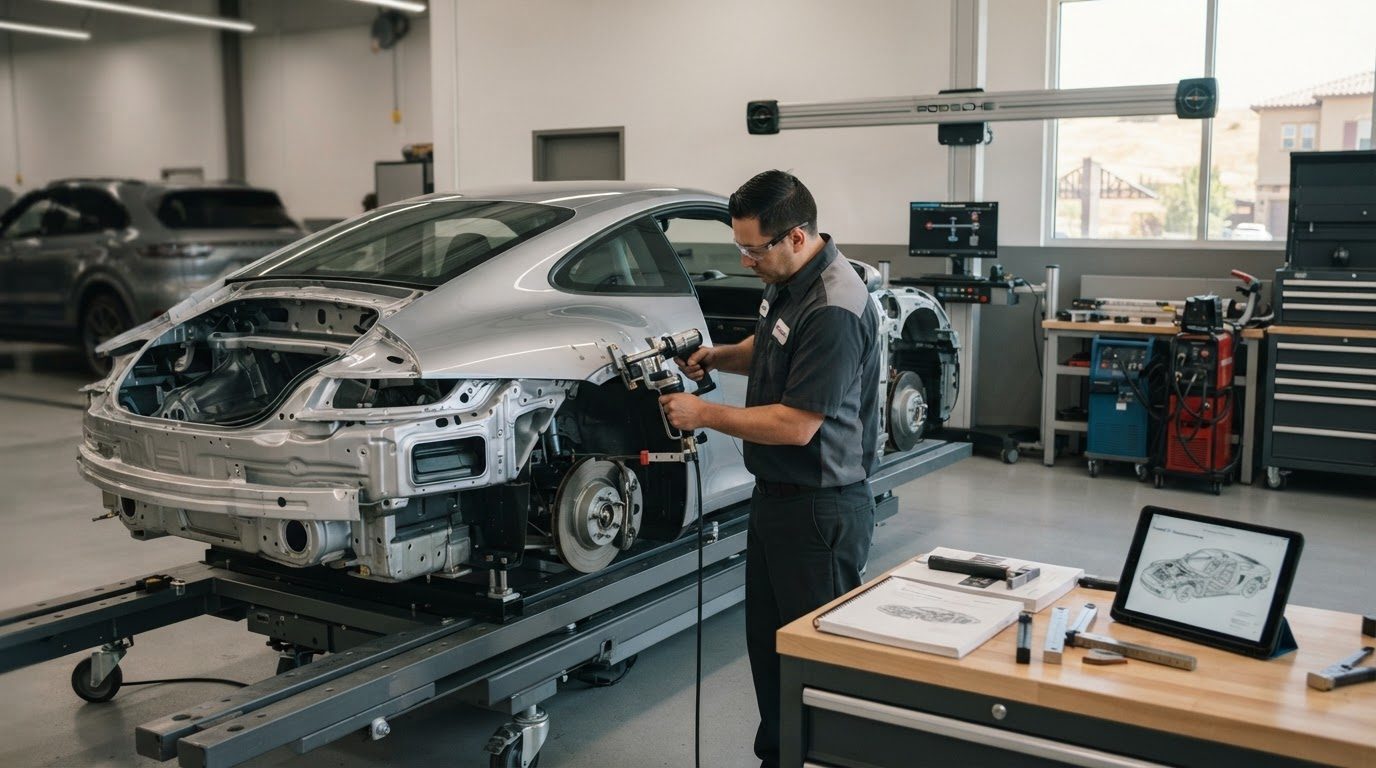
A Porsche can look lightly damaged after a collision while concealing distorted mounting points, sensor misalignment, suspension damage, or compromised crash structure. The visible dent is often only the beginning of the inspection.
Choosing the right porsche body shop means evaluating more than paint quality. The facility should understand Porsche construction, document its methods, communicate effectively with the insurer, and return the vehicle with its safety systems verified.
Sacramento drivers also contend with intense summer heat, road debris, and heavy commuter traffic. Those conditions make correct refinishing, corrosion protection, glass installation, and post-repair calibration important long after the insurance claim closes.
What Porsche Certification Should Mean for Your Repair
Porsche certification is more than a logo on a building. A factory-approved collision facility is expected to maintain:
- Factory-trained technicians and ongoing technical education.
- Approved measuring, welding, aluminum-repair, refinishing, and diagnostic equipment.
- Current Porsche repair procedures, materials, tools, and genuine parts.
- Documented quality-control processes and continuing factory oversight.
That differs from a general collision center that occasionally repairs a Porsche. Familiarity with a model is useful, but it does not prove that technicians know which structural components may be sectioned, where joints may be placed, or how sensors must be recalibrated.
Factory procedures and genuine Porsche parts support correct fit, corrosion protection, crash performance, warranty considerations, future pre-purchase inspections, and resale confidence. A well-documented repair can show what was replaced, how the structure was measured, and whether driver-assistance systems were restored. An undocumented shortcut may become a negotiating point for a dealer or knowledgeable buyer.
California vehicle owners generally have the right to select their repair facility. An insurer may recommend a shop, but the carrier or tow operator should not make that decision automatically. If a collision is not safely drivable, confirm the destination before authorizing a tow.
Why Porsche Collision Work Requires Specialized Methods
Modern Porsches combine aluminum, high-strength steel, hot-formed steel, composites, bonded components, and tightly engineered crumple zones. The correct repair method depends on the material and the location of the damage.
Improper pulling can stretch metal or transfer force into an undamaged section. Incorrect sectioning or welding can change load paths. Even a replacement panel that appears visually acceptable may leave incorrect gaps, wind noise, water intrusion, or altered crash behavior.
A qualified repair plan may include:
- Three-dimensional structural measuring against factory dimensions.
- Computerized diagnostic scans before and after repairs.
- Inspection of radar units, cameras, ultrasonic parking sensors, wiring, and mounting brackets.
- ADAS calibration using targets, alignment equipment, static procedures, or controlled road testing as required.
- Wheel alignment and suspension checks when an impact reaches a wheel, hub, rocker, or corner.
Taycan repairs add high-voltage safety requirements. Technicians must follow an appropriate isolation and verification sequence before body or structural work near the battery, cables, motors, or associated components. Personal protective equipment, insulated tools, lockout procedures, and manufacturer-specific verification are essential. A shop that repairs gasoline-powered Porsches is not automatically prepared for electric-vehicle collision work.
Air-cooled and other classic models require a different approach. Parts availability, thin-gauge metal, prior restoration work, originality, and period-correct repair techniques may affect the estimate. A 1980s 911 should not be treated exactly like a current-generation vehicle.
Porsche Repairs From Cosmetic Damage to Structural Collision Work
Repair decisions should follow Porsche procedures and measured damage—not simply the lowest visible estimate.
Exterior and bolt-on damage: Bumpers, grilles, lamps, hoods, doors, fenders, quarter panels, splitters, and trim may be repaired or replaced. Technicians inspect mounting tabs, brackets, absorbers, wiring, and adjacent panels before choosing a method.
Mechanical and concealed damage: A front impact can affect radiators, condensers, cooling fans, steering components, engine accessories, and active-air systems. A wheel strike may require inspection of the tire, wheel, hub, bearing, control arms, subframe, and alignment.
Structural damage: When damage extends beyond exterior panels, the facility should measure the body on certified equipment, secure it correctly, and follow factory specifications for pulling, sectioning, welding, riveting, bonding, and corrosion protection. Measurements should be recorded rather than assumed from panel gaps.
Glass and restraint systems: Windshields contribute to body integrity and may house cameras. Replacement glass, adhesive cure time, camera calibration, airbags, seat belts, and occupant sensors all deserve inspection after a substantial collision.
Refinishing: Standard solid colors, metallic finishes, and Paint to Sample colors require different color-control strategies. Digital spectrophotometer analysis can identify a starting formula, but skilled technicians still adjust for age, lighting, substrate, and spray technique. Controlled blending into adjacent panels may be necessary to make the repair visually consistent.
Minor damage also deserves a technical assessment. Stone-chipped noses, scraped splitters, and curbed rockers may be repairable without extensive replacement. After refinishing, owners can discuss paint-protection film or ceramic protection, provided the coating is applied only after the finish has properly cured.
How a Porsche Collision Repair Is Managed From Estimate to Delivery
A disciplined process usually follows these stages:
- Initial inspection: The shop photographs the vehicle, records mileage and condition, checks drivability, scans electronic systems where appropriate, and identifies visible and likely concealed damage.
- Teardown and supplement: Bumpers, trim, liners, and damaged panels may need removal before hidden damage is known. A supplement is an additional estimate supported by photographs, measurements, scan results, and factory procedures—not evidence of poor planning by itself.
- Repair plan and parts sourcing: The owner and insurer should receive clear explanations of labor, parts, procedures, and expected delays. Genuine Porsche parts may cost more and take longer to obtain than aftermarket alternatives, but the trade-off can involve fit, finish, documentation, and engineering consistency.
- Structural restoration: Technicians restore dimensions first, then complete approved joining, corrosion protection, and panel alignment.
- Refinishing and reassembly: The vehicle is cleaned, masked, sealed, painted, cured, and reassembled in a controlled environment. Secure indoor storage helps protect exposed components and finished surfaces.
- Calibration and quality control: Post-repair scans, wheel alignment, lighting checks, leak checks, panel-gap inspection, and ADAS calibration follow the applicable procedures.
- Road testing and delivery: A road test can identify steering pull, vibration, warning lights, wind noise, or sensor faults. Delivery should include repair documentation, replaced-part information when available, calibration confirmation, warranty terms, and instructions for post-repair care.
Pricing varies substantially. Minor bumper or cosmetic work may run approximately $1,000–$3,000. A door, fender, or lamp repair can reach $2,000–$6,000, while structural, ADAS, aluminum, or Taycan repairs commonly exceed $8,000 and may go well beyond $15,000. Parts availability, paint complexity, hidden damage, and calibration requirements are the main variables.
Choosing the Right Porsche Body Shop in Sacramento
Use a facility-selection checklist rather than relying on an insurer’s referral alone. Ask:
- Is the facility currently Porsche-approved, and can it explain what that approval covers?
- Are technicians trained for the specific model and materials involved?
- Does the shop have certified measuring, aluminum, welding, refinishing, scanning, and calibration equipment?
- Will it use genuine Porsche parts and current factory repair procedures?
- Can it safely isolate and repair a Taycan’s high-voltage system?
- How are Paint to Sample and rare finishes measured, blended, and approved?
- Will pre- and post-repair scans, calibration records, and structural measurements be documented?
- How are vehicles secured from weather, dust, theft, and accidental damage?
- What workmanship warranty and communication schedule are provided?
I-CAR training, ASE credentials, OSHA-compliant safety practices, and EPA-compliant refinishing controls are useful indicators of professional operations, but they do not replace Porsche-specific approval. Ask for evidence that the shop’s capabilities match the vehicle.
Questions Porsche Owners Commonly Ask
What makes a collision center Porsche certified?
The program generally addresses training, equipment, materials, procedures, facility standards, and continuing oversight. Confirm current status rather than relying on an old advertisement.
Will factory-procedure repairs help preserve my Porsche’s value?
They can. Documented work using approved methods and genuine parts gives inspectors, dealers, and future buyers greater confidence, although no repair erases a vehicle’s accident history.
Can a body shop safely repair a Taycan after a collision?
Yes, if it has the required electric-vehicle training, high-voltage isolation process, safety equipment, and diagnostic capability. Do not assume every Porsche facility meets those requirements.
How are Paint to Sample and rare Porsche colors matched?
Digital color analysis helps identify the formula and variation. Experienced refinishers then perform spray-out tests, adjust the blend, and inspect the result under controlled and natural light.
Does the insurance company choose the body shop?
You generally choose the facility in California. The shop can communicate with the carrier, but the insurer’s estimate does not override the manufacturer’s technical repair requirements.
What should I do if my Porsche was hit while parked?
Photograph the scene and vehicle, notify your insurer, avoid driving if warning lights or fluid leaks appear, and verify the tow destination before the vehicle is moved. A prompt scan and inspection can identify damage hidden behind the bumper or wheel area.
A qualified facility should be prepared for the 911 across generations, 718 Cayman and Boxster, Taycan, Macan, Cayenne, Panamera, and selected air-cooled classics. The right decision is not simply where the paint looks good; it is where the repair can be measured, documented, calibrated, and defended as technically correct.
